
Innovative master programme
State-of-the-art, meeting employers' needs in the bioeconomy sector
European Master in Biological and Chemical Engineering for a Sustainable Bioeconomy
Bioceb (European Master in Biological and Chemical Engineering for a Sustainable Bioeconomy) is a 2-year joint master programme, a state-of-the-art and innovative curriculum, training future research and innovation managers to tackle the challenges related to the deployment of the bioeconomy across the world.
Bioceb? (European Master in Biological and Chemical Engineering for a Sustainable Bioeconomy) is a 2-year joint master programme, a state-of-the-art and innovative curriculum, training future research and innovation managers to tackle the challenges related to the deployment of the bioeconomy across the world.
Bioceb vision of the bioeconomy is based on the sustainable use of biological resources, preserving biodiversity and favouring circular economy systems. It offers students with backgrounds in biology-related disciplines the opportunity to specialise in one field of biotechnologies while developing the ability to implement systemic value chain approaches. The three pillars of Bioceb biotechnology training core are:
Bioceb addresses the needs of the growing bio-based industry sector in scientists being aware of the markets and socio-economic contexts. It arises from an interdisciplinary approach combining chemistry, biology, economic and environmental sciences with cross-cutting skills including project management. Its modular construction promotes a cultural mix between students from different regions of the world and with various educational backgrounds.
State-of-the-art, meeting employers' needs in the bioeconomy sector
from academia and industry, from all around the world

One shared ceremony for all partner universities

but connecting to local cultures and languages

France — all students together from day one

Induction week, summer school
from prestigious universities, after 120 ECTS in at least 2 European countries
worldwide recognised institutions from 4 European countries
Small group size ensuring quality mentoring and individual support
Avec une description

The first Bioceb project, an Erasmus Mundus Joint Master Degree funded from 2019 to 2025 with the support of the Erasmus + Programme of the European Union (Project Reference: 610559-EPP-1-2019-1-FR-EPPKA1-JMD-MOB), has just come to an end.
A second Bioceb project, an Erasmus Mundus Joint Master, is being co-funded by the European Union, as from October 2025 to November 2031 (Project Reference: 101239726).
Funded by the European Union. Views and opinions expressed are however those of the author(s) only and do not necessarily reflect those of the European Union or the European Education and Culture Executive Agency (EACEA). Neither the European Union nor EACEA can be held responsible for them.
You have a strong background in biology, and you want to achieve a specialization in biotechnologies to ensure a sustainable global use of biological resources.
You have a degree in chemical engineering with experience in biomass valorization, and you want to contribute to the deployment of the bio-based chemical industry worldwide.
… Bioceb will help you meet your career expectations while offering you an international and intercultural experience in different bioeconomy contexts.
Through the Bioceb programme, you will benefit from synergetic expertise of professors and managers from international companies, all contributing to large-scale collaborative research and innovation projects for the bioeconomy. You will receive a high-level scientific and technological training while developing personal skills, such as your capacity to interact in groups and your adaptability.
You will be part of a one-of-a-kind programme that addresses all the dimensions of sustainable bioeconomy, covers the value chain (from plant resources to manufactured bioproducts), and focuses on different scales (from the gene to the industrial process and socio-economic environment).
According to your background and your aspirations, you will tailor your own profile thanks to the semester options, the project, and the master’s thesis.
With Bioceb, you will benefit from:
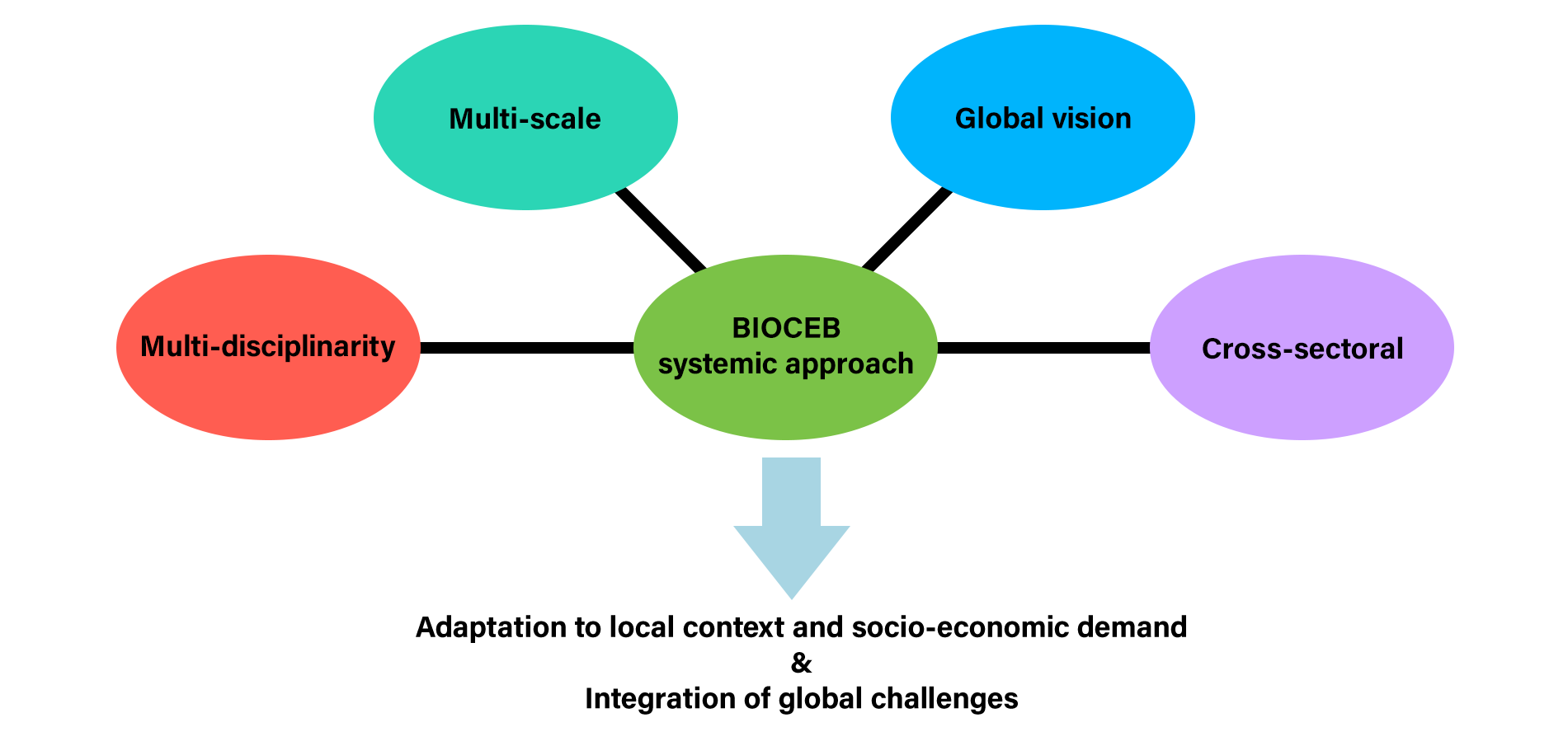
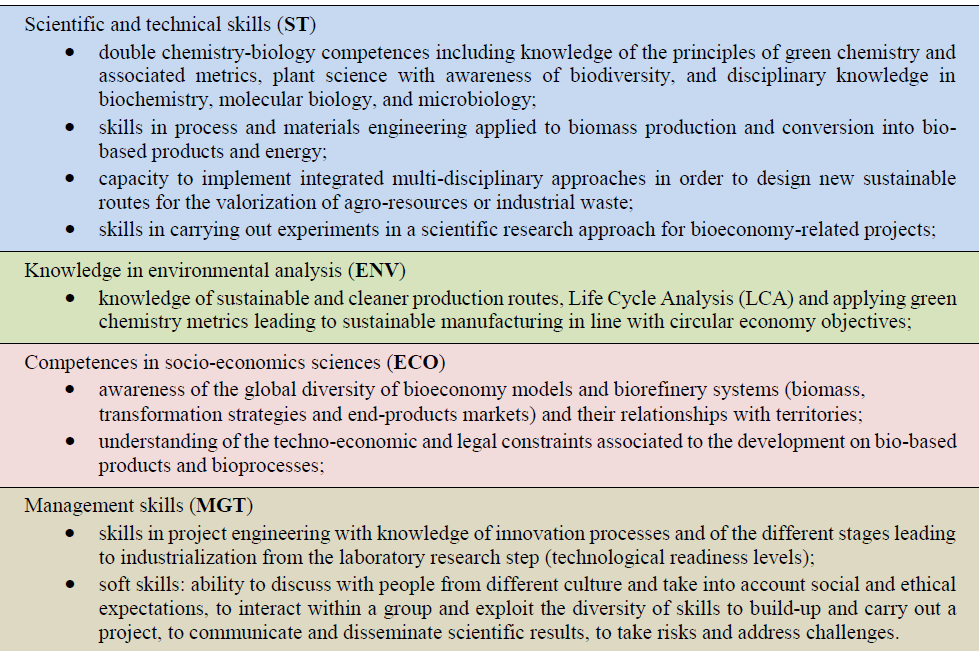
At the end of Bioceb, you will have acquired the following competencies:
Avec une description
Funded by the European Union. Views and opinions expressed are however those of the author(s) only and do not necessarily reflect those of the European Union or the European Education and Culture Executive Agency (EACEA). Neither the European Union nor EACEA can be held responsible for them.